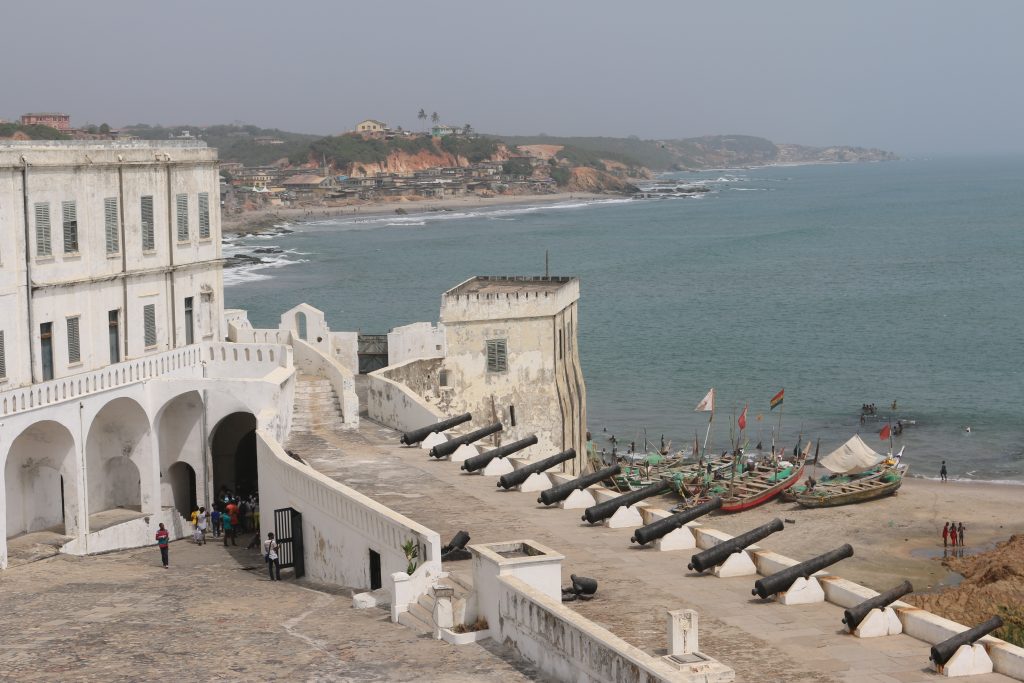
Most people planning a Central Region trip ask the same question first: can Cape Coast Castle and Elmina Castle be done in a single day, or is it better to split them across two days? It’s a fair question. Both are UNESCO World Heritage sites, both sit on Ghana’s Atlantic coastline about fifteen minutes apart by road, and both carry the kind of history that deserves more than a rushed hour ticking a box.
If you’ve already read about what Cape Coast Castle and Elmina Castle are, this guide picks up where that leaves off. We’ll walk through distances, fees, opening hours, what the guided tour actually involves, and how to structure your day(s) so you leave with more than a stamped ticket and a sore pair of feet.
Cape Coast Castle and Elmina Castle at a Glance
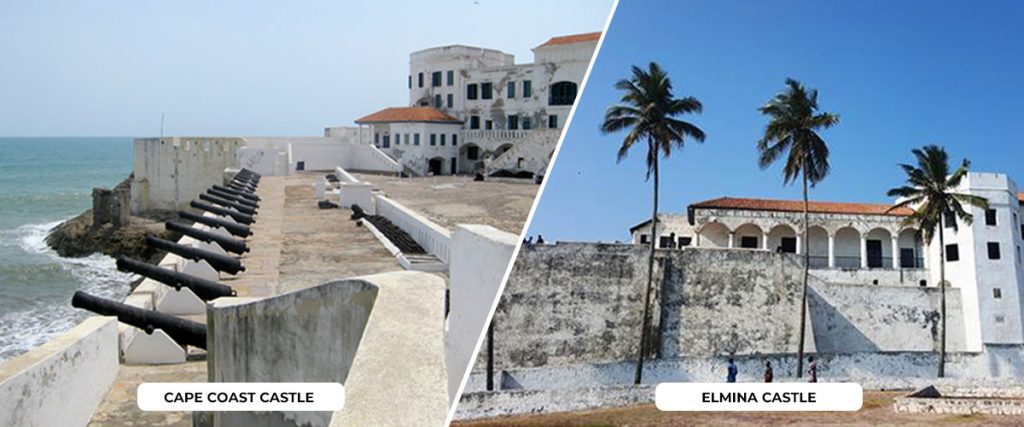
They’re often mentioned in the same breath, but Cape Coast Castle and Elmina Castle are two distinct sites with different builders, different timelines, and slightly different visitor experiences.
| Cape Coast Castle | Elmina Castle | |
| Built | 1653, by Swedish traders as Fort Carolusburg | 1482, by the Portuguese |
| Notable for | Later became the seat of British colonial administration in the Gold Coast; houses the West African Historical Museum | Oldest surviving European-built structure in sub-Saharan Africa; originally named São Jorge da Mina |
| Distance from Accra | Roughly 150–165 km, about a 3-hour drive | Roughly 165–175 km, about 15 minutes past Cape Coast |
| UNESCO status | Part of “Forts and Castles, Volta, Greater Accra, Central and Western Regions,” inscribed 1979 | Same UNESCO listing |
| Setting | Whitewashed fort overlooking the Cape Coast waterfront and town | Overlooks a working fishing harbour still active today |
Both sites are managed by the Ghana Museums and Monuments Board (GMMB), so the fee structure, guided-tour format, and general visiting rules are consistent between them.
Getting There From Accra
Distance and Drive Time
Estimate about three hours for the drive from Accra to Cape Coast under normal traffic. The estimated duration holds whether you’re self-driving, taking an organized tour vehicle, or using a bus service. The road itself (the N1 coastal highway) is the limiting factor due to ongoing road expansion works. Add another fifteen to twenty minutes if Elmina is your first stop, since it sits slightly further along the coast.
Traffic leaving Accra in the early morning can add 30–45 minutes to that estimate, particularly if you’re departing from the eastern side of the city during rush hour. Leaving before 7:00 a.m. is the single easiest way to protect your schedule for the rest of the day.
Transport Options
- Self-drive: Doable, but the N1 has stretches of heavy truck traffic and some sections under periodic repair. Fine for confident drivers; less ideal for a first Ghana trip.
- Intercity bus/tro-tro: The cheapest option, running from Accra’s main stations to Cape Coast, but you’ll need separate local transport to reach Elmina and the individual sites once you arrive.
- Organized tour transport: The most efficient option if your time in Ghana is limited, since it removes the need to coordinate drivers, entrance tickets, and timing between sites yourself. Pacific Tours’ Elmina Castle experience handles pickup, transport, and entry logistics as one package.

Cape Coast Castle or Elmina Castle: Which Should You See First?
There’s no single correct answer, but there is a practical one. Most Central Region day trips visit Elmina first, then Cape Coast, largely because of geography: coming from Accra, you’ll pass close to Cape Coast before reaching Elmina, but doubling back to Cape Coast afterward tends to work better with lunch stops and the timing of guided tours.
There’s also a case for going chronologically. Elmina was built first, in 1482, and seeing it before Cape Coast Castle (built almost two centuries later, in 1653) gives the history a clearer sense of sequence: how the scale and purpose of these forts changed as European trading interests shifted from gold toward the transatlantic slave trade.
If you can only visit one because of time, that decision usually comes down to what you want most from the day:
- Choose Cape Coast Castle if you want the fuller museum experience. The West African Historical Museum inside the castle adds context you won’t get at Elmina.
- Choose Elmina Castle if the “oldest European structure in sub-Saharan Africa” angle matters to you, or if you’d like to see the castle set against a still-active fishing harbour, which adds a layer most visitors don’t expect.
Honestly, though, most travelers who make the three-hour drive choose to see both. The incremental cost and time of adding the second site is small compared to the trip itself.
Entrance Fees and Opening Hours
Both castles fall under GMMB’s “National Museum and Castles” fee category. As of the Board’s most recent published schedule, the rates are:
| Category | Entrance Fee (GH₵) |
| Ghanaian adults | 20.00 |
| Non-Ghanaian adults | 80.00 |
A guided tour is included in the entrance fee at both sites; you won’t be left to explore the dungeons unaccompanied, and you shouldn’t want to. The guides add context that’s genuinely hard to get any other way.
Opening hours are generally 9:00 a.m. to 4:30 p.m. daily. That said, GMMB reviews its fee schedule periodically, and hours can shift around public holidays or special events like PANAFEST. It’s worth confirming current pricing and hours directly with GMMB or, if you’re booking through a tour operator, letting them confirm it as part of your itinerary. This is exactly the kind of small detail that’s easy to get wrong from a search result that’s a year or two out of date.
What Actually Happens on the Tour
The Guided Walkthrough
Tours typically run 45 minutes to an hour and move through the courtyards, the governor’s quarters, the museum exhibits, and the dungeons in sequence. Guides are trained to give historical context rather than just recite dates. Expect them to explain not just what happened in each space but why it happened there specifically, and how the architecture itself was designed around control and containment.
Visiting the Dungeons and the Door of No Return
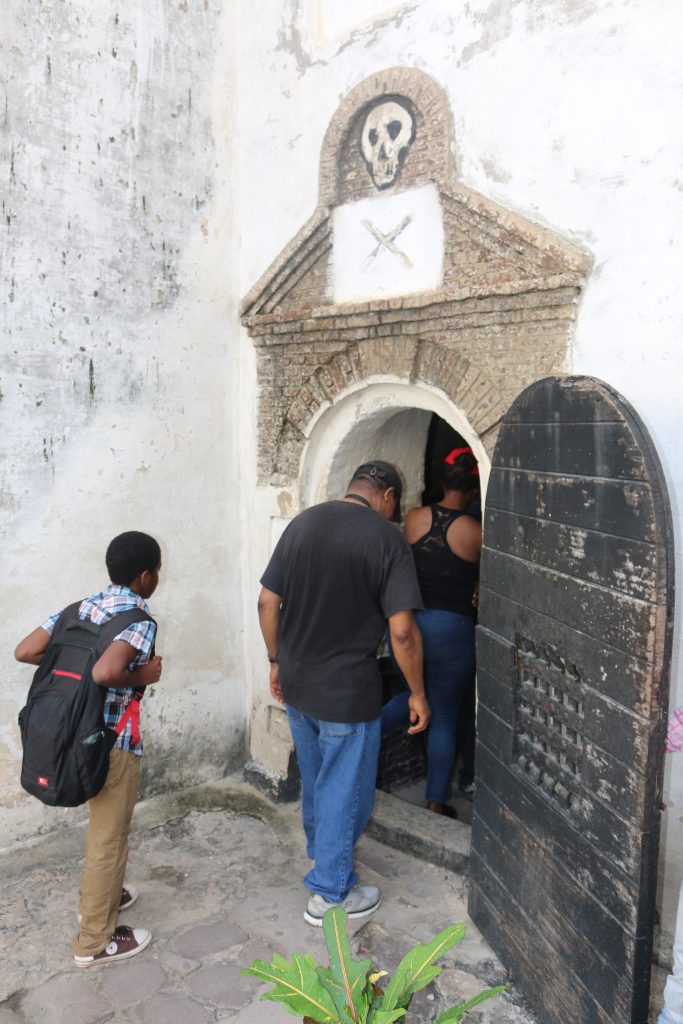
This is the part of the tour most people come for, and it’s also the part that’s hardest to prepare for. The dungeons are dark, low-ceilinged, and were built to hold far more people than would be considered survivable by any modern standard. The Door of No Return, the final exit point before enslaved people were loaded onto ships, is a small, unremarkable-looking doorway that tends to land harder than visitors expect, precisely because of how ordinary it looks.
We won’t try to describe the emotional weight of that experience for you here; it’s genuinely different for every visitor, and it should be. What we will say is this: give yourself permission to feel whatever comes up, and don’t schedule anything demanding immediately afterward.
Coming Prepared, Physically and Emotionally
A few practical notes that make a real difference:
- Footwear: Stone floors, uneven steps, and some steep staircases. Closed, comfortable shoes are worth it; sandals are a genuine liability here.
- Water: Bring your own. The tour takes you outdoors between covered areas, and the Central Region coast runs hot and humid most of the year.
- Photography: Generally permitted in the courtyards and museum; check with your guide before photographing inside the dungeons, since some sections restrict it out of respect.
- Pacing: Don’t book anything tightly scheduled right after. Many visitors want a quiet lunch or a walk along the beach before moving on to the next stop.
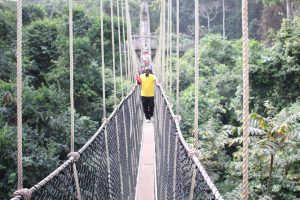
Combining Cape Coast, Elmina, and Kakum National Park
If Kakum National Park’s canopy walk is also on your list, and for most first-time visitors to the Central Region, it is, you have two realistic options.
Kakum has its own separate entrance fee, apart from the castles: Ghanaian adults pay GH₵60, and non-Ghanaian adults pay GH₵150. Worth budgeting for as a separate line item if you’re combining it with the castles in one trip.
Option 1: One long day. Kakum in the morning while you’re fresh (the canopy walk is best done early anyway, before crowds and midday heat), then Elmina and Cape Coast Castle in the afternoon. This works, but it’s a full day, and the emotional weight of the castles lands differently when you’re already tired from a rainforest hike.
Option 2: Two days. Castles on day one, Kakum on day two (or vice versa), with an overnight stay in Cape Coast or Elmina in between. This is the option we’d actually recommend if your schedule allows it. It gives each experience room to breathe instead of compressing three very different kinds of days into one.
Pacific Tours’ Experience Ghana in 6 Nights package is built around exactly this kind of pacing: it includes Cape Coast and Elmina Castles, the Kakum canopy walkway, and an Accra city tour without cramming them into a single exhausting itinerary.
Best Time of Year to Go
Ghana’s dry season, roughly November through March, gives you the most comfortable conditions for the drive and for walking around the outdoor sections of both castles. That said, this isn’t a beach trip where weather makes or breaks the day. The castles are compelling in any season, and interior tour areas are covered.
Two timing notes worth knowing:
- Early mornings (before 11:00 a.m.) consistently mean smaller tour groups and a quieter experience, which matters more here than at most attractions.
- PANAFEST, Ghana’s biennial pan-African cultural festival, brings a significant program of events to Cape Coast and Elmina, typically in the summer months. If you want to experience the festival atmosphere, plan around it; if you’d rather have a quieter, more reflective visit, avoid it. Check the Ghana Tourism Authority’s calendar or confirm dates with your tour operator, since PANAFEST’s exact scheduling varies by year.
For Diaspora Travelers Reconnecting With Heritage
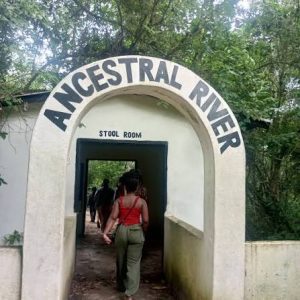
For many visitors from the diaspora, Cape Coast and Elmina aren’t just historical stops; they’re the reason for the trip. If that’s you, a few things are worth knowing going in.
Many heritage-focused itineraries pair the castles with a stop at Assin Manso, inland from Cape Coast, known as the site of the “last bath,” where enslaved people were historically brought before continuing to the coast, and now home to the reinterred remains of two repatriated ancestors. It’s a meaningful addition if your trip is specifically about heritage and ancestry rather than general sightseeing, and it’s worth mentioning to your tour operator when you book so it can be built into the route.
Ghana’s Year of Return initiative and PANAFEST have both brought a steady increase in diaspora visitors to this region over recent years, and the local infrastructure around Cape Coast, including guides, accommodation, and tour operators, has grown accordingly. You won’t be navigating this alone; it’s a well-established route for exactly this kind of journey.
Common Mistakes First-Time Visitors Make
- Underestimating drive time. Three hours can become four with traffic or a late start.
- Trying to do too much in one day. Castles, Kakum, and a beach stop all in one day sounds efficient on paper and exhausting in practice.
- Assuming fees are fixed. GMMB reviews entrance pricing periodically. Confirm current rates before you travel rather than budgeting off an old blog post (including, ironically, this one; always good practice to double-check).
- Wearing the wrong shoes. Worth repeating: stone floors and uneven steps are not sandal-friendly.
- Skipping the museum at Cape Coast Castle. It’s easy to walk straight to the dungeons and miss the West African Historical Museum, which adds context that makes the rest of the visit land more clear.
Planning the Rest of Your Trip
If Cape Coast and Elmina are one stop on a bigger Ghana itinerary, our guide to the top 12 places to visit in Ghana is a good next read. It covers Kakum, Aburi Botanical Gardens, and several other Central and Eastern Region stops that pair naturally with a Cape Coast trip.
Planning logistics for two UNESCO sites, transport, and timing can get complicated fast, especially if you’re also trying to fit in Kakum or a heritage-focused detour to Assin Manso. If you’d rather not manage that yourself, working with a tour operator who already knows the route, the guides, and the timing takes that pressure off. Pacific Tours has been running Central Region heritage tours for years and can build the day(s) around what matters most to you.
Frequently Asked Questions
Can I visit Cape Coast Castle and Elmina Castle in one day?
Yes, they’re about fifteen minutes apart by road, and it’s the most common way visitors see both. Just be realistic about how much else you add to the same day: pairing both castles with Kakum National Park in a single day is possible but makes for a very long one.
How much does it cost to enter Cape Coast Castle and Elmina Castle?
Both sites use the same GMMB fee structure. As of the most recent published schedule, non-Ghanaian adults pay GH₵80 per site, and Ghanaian adults pay GH₵20, with reduced rates for students. Fees are reviewed periodically, so confirm current pricing before you travel.
How far is Cape Coast from Accra?
Roughly 150–165 km, which typically takes about three hours by road under normal traffic conditions.
Which is better, Cape Coast Castle or Elmina Castle?
They’re different rather than better or worse. Cape Coast Castle includes the West African Historical Museum; Elmina Castle is older (built in 1482) and sits beside a working fishing harbour. Most visitors who make the trip choose to see both.
Do I need to book a guided tour in advance?
A guided tour is included in your entrance fee and isn’t optional; you won’t be exploring the dungeons unaccompanied. Booking your overall visit in advance through a tour operator is recommended if you’re combining multiple sites in one day, purely for timing and transport logistics.
Is Cape Coast Castle appropriate for children?
The subject matter is serious and some content may be difficult for younger children to process. Many families do visit with school-age children as part of educational trips, and guides are generally experienced at pacing tours appropriately for different age groups, but it’s worth discussing with your tour operator ahead of time if you’re traveling with young kids.
What should I wear to visit the castles?
Comfortable closed shoes for uneven stone floors and steps, and light, breathable clothing for the outdoor courtyards. Modest dress is appropriate given the nature of the sites.